Where the sky does the talking – Chobe’s November skies
In November, we spend a lot of time looking up. The river is still busy, the elephants still come down to drink, but the real show is happening above our heads. After months of dry, pale blue, the sky over Kasane wakes up. It builds, it rumbles, it burns orange, and then it fills with stars. Here is a day under the November sky, as we see it from the banks of the Chobe.
Late morning: the towers rise. By eleven o’clock the first clouds appear over the floodplains on the Namibian side. By lunchtime they have grown into white towers, taller than anything else in the landscape, with flat, dark bases. The air turns heavy and still. Our guides read these clouds the way they read tracks in the sand: some will pass, some will break.
Afternoon: the first rain. When a storm does break, you smell it before you feel it. Wet dust, warm earth, a scent that every guest remembers. The rain is often short and loud, drumming on the tin roofs. Afterwards, the bush comes alive. Winged termites rise from the ground in their thousands, and within minutes the birds arrive for the feast. Along the riverbanks, carmine bee-eaters flash pink and turquoise as they hunt in the cleared air.
The storm hour on the river. Some of our favourite boat cruises happen with a storm on the horizon. From the water you can watch lightning walk across a distant cloud while the sun still lights the elephants in front of you. Thunder rolls in a few seconds later. Our skipper keeps an eye on the weather and brings you back to the jetty well before a storm comes close, but at a safe distance it is pure theatre. If the sun breaks through behind you, look the other way: November is rainbow season, and a full arc over the Chobe is something you never forget.
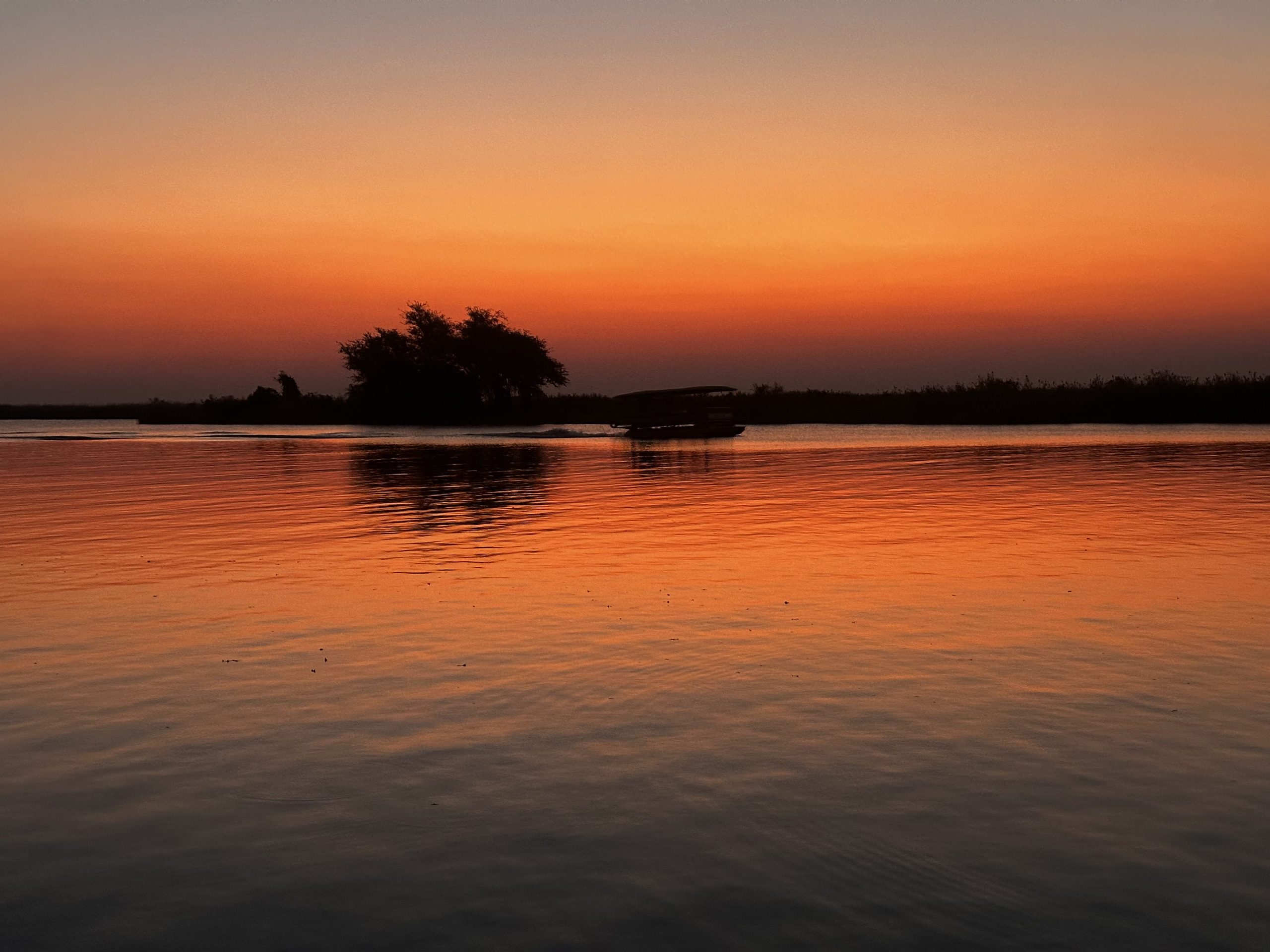
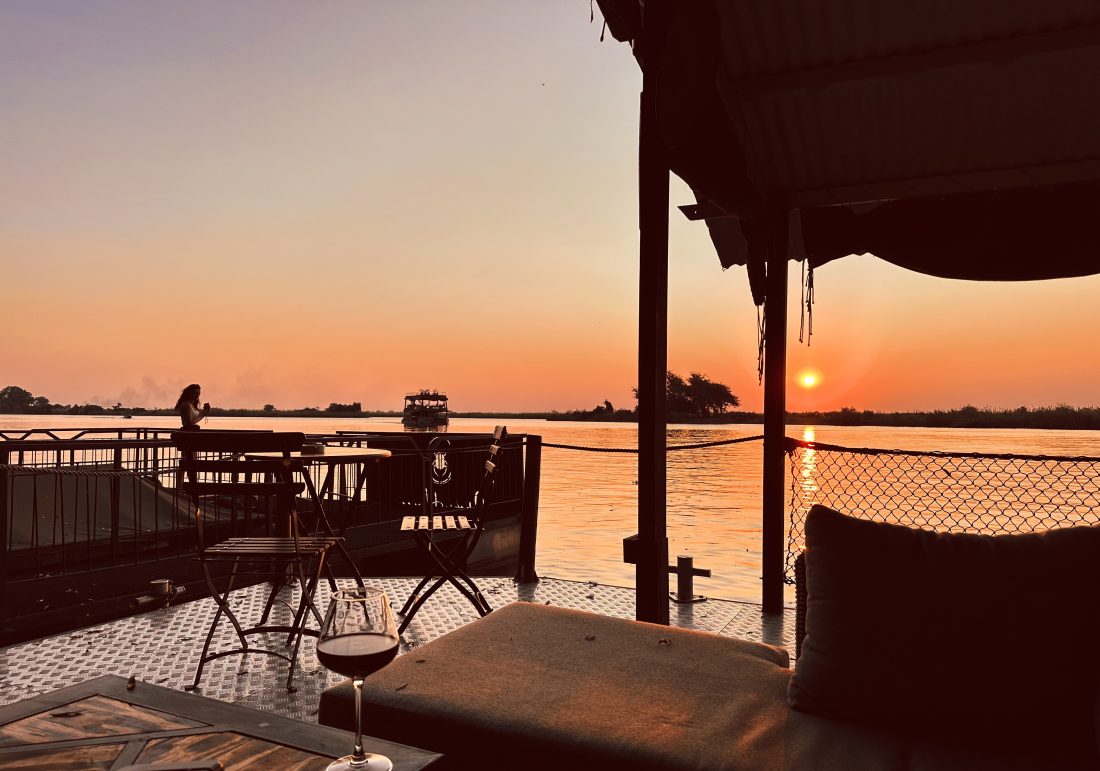
Sunset: the sky catches fire. After rain, the light changes. The dust has been washed out of the air, and the colours become deeper: copper, rose, then violet. On calm evenings the river turns into a mirror, and the sky appears twice, once above and once beneath the boat. This is the moment for a sundowner, on the water or on our deck, when even the hippos seem to pause.
After dark: the southern sky. Once the storm clouds drift away, Kasane’s night sky is wide and clear. Away from big city lights, the stars come out by the thousand.
- The Magellanic Clouds: two soft, glowing patches high in the southern sky. They are small neighbouring galaxies, visible only from the southern hemisphere.
- The Southern Cross: low near the southern horizon in the early evening, higher in the hours before dawn.
- Orion: rises in the east later in the evening, upside down to visitors from the north.
- The full moon: around 24 November it rises over the floodplain, often orange as it clears the horizon.
And the soundtrack never stops: frogs calling after the rain, the deep grunt of a hippo, sometimes a lion far away.
Tips for sky watchers
- Pack a light rain jacket: November showers are warm but sudden.
- Protect your camera: a dry bag on the boat, and a soft cloth for raindrops on the lens.
- Bring a small tripod or bean bag for stars and lightning; long exposures need a steady base.
- Look up after dinner: ask our team to dim the lights on the deck for a few minutes.
- Read more: what the green season means for wildlife in our article on Chobe in the green season, and how to capture it in our photography tips.
We can never promise a storm, a rainbow or a cloudless night. That is the beauty of it: every November evening is different, and the sky decides.
Come and watch it with us at Chobe House!