
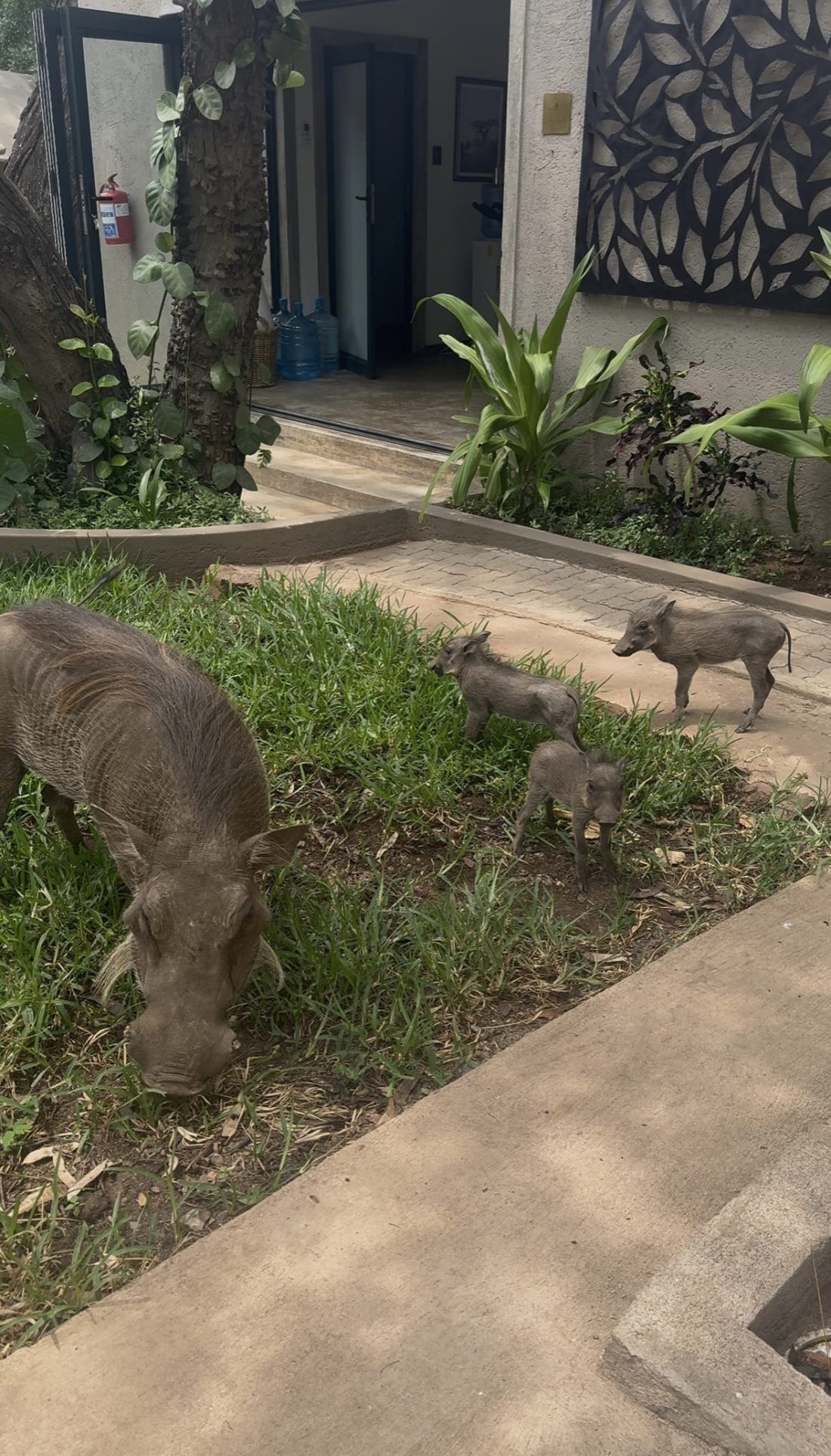
Little Tails in the Garden: Warthog Season at Chobe House
Every year around the first rains, Chobe House welcomes some very small, very busy guests. They never book ahead, they ignore the house rules, and they leave the lawn looking like a freshly ploughed field. We wouldn’t have it any other way.
The Season of Small Tails
If you’re staying with us at this time of year, keep an eye on the garden in the early morning. Sooner or later you’ll spot it: a row of thin tails sticking straight up into the air like tiny radio antennas, bobbing through the grass in single file. Warthog season has arrived at Chobe House.
In northern Botswana, warthog piglets are typically born between October and December, timed so that the young arrive just as the first rains bring fresh green growth. A mother usually gives birth to two to four piglets in an underground burrow, often an old aardvark den, and keeps them safely hidden there for their first weeks of life. Once they’re strong enough, the little family emerges to explore the world. And for the warthogs living along the Chobe River in Kasane, part of that world happens to be our garden.
Why the Tails Point to the Sky
Those upright tails aren’t just adorable. When a warthog family runs through tall grass, the raised tails act like little flags, helping the piglets keep sight of their mother and each other. It’s one of nature’s simplest navigation systems, and watching a whole family trot off with tails held high is one of the most charming sights you can enjoy without ever leaving the sun deck of our main house.
Another habit guests love: warthogs often drop down onto their front knees to graze. They have tough, padded skin on their wrists that allows them to “kneel” comfortably while they nibble short grass and dig for food. The piglets copy their mother from the very beginning, which means you may see an entire row of tiny warthogs kneeling side by side as if in quiet prayer, before getting back to their real passion: digging.
Our Most Enthusiastic Gardeners
Let’s be honest. Warthogs are not ideal garden guests. With their strong snouts, they plough through the soil in search of roots, bulbs and tender shoots, and a well-watered lawn is about as tempting as it gets, especially after the long dry season. Overnight, a perfectly neat patch of grass can turn into something that looks like it was tilled with a tractor.
Our garden team has learned to greet the damage with a sigh and a smile. A churned-up flowerbed is a small price to pay for living this close to the wild. After all, Chobe House sits just minutes from the entrance to Chobe National Park, and the line between “garden” and “bush” here is a lot thinner than any fence would suggest. The warthogs were here first, and in their own way they remind us of that every morning.
Where the Garden Meets the Wild
There’s a serious side to this lovable chaos. As towns like Kasane grow, more of the land that wildlife depends on is shared with homes, roads and lodges. Watered lawns and gardens can draw animals in, particularly when food in the bush is scarce. That’s not a problem to be solved so much as a balance to be respected.
Warthogs play an important role in the ecosystem. Their digging turns over and aerates the soil, they are a vital food source for lions, leopards, cheetahs and hyenas, and their abandoned burrows give shelter to other animals. A healthy warthog population is a sign of a healthy landscape.
At Chobe House, we try to be good neighbours: we don’t feed the animals, we avoid chemicals that could harm them, and we accept that a garden in the heart of wildlife country will never look like a manicured park. When we choose plants, we favour hardy indigenous species that belong here, for the warthogs and for us.
How You Can Be a Good Neighbour Too
Seeing a warthog family up close is a real privilege. Here’s how to enjoy it while keeping the animals wild, safe and stress-free:
- Keep your distance. Piglets may look cuddly, but mothers are fiercely protective and those tusks are real. Watch from your veranda or a respectful distance, and never get between a mother and her young.
- Never feed them. Food from people teaches wild animals to approach humans, which can lead to dangerous encounters and an unhealthy diet. A warthog that learns to beg rarely ends well.
- Don’t leave food or rubbish outside. Keep snacks indoors, so no curious snout gets a reward it shouldn’t.
- Stay calm and quiet. Avoid chasing, calling or crowding them for a photo. The best sightings happen when the animals feel relaxed enough to carry on as normal.
- Use your zoom, not your feet. A good telephoto shot will always beat a close-up that frightens a family away.
- Ask our team. Our staff know the garden’s regular visitors well and are always happy to share stories and tips.
A Garden Full of Life
Most guests come to Kasane for the famous elephant herds of Chobe and the sunsets over the river. Many leave with an unexpected favourite memory: a family of warthogs trotting across the lawn at breakfast, tails held high, piglets tumbling after their mother.
The flowerbeds will grow back. The lawn will recover once the rains settle in. And next year, the little tails will return. To us, that’s not a garden problem. It’s a sign that Chobe House is exactly where it belongs: right in the middle of nature.
We look forward to welcoming you to Chobe House. Who knows, maybe our youngest garden residents will be there to greet you.
